Tuesday, October 14, 2014

Frequency-Hopping Inventor, Hedy Lamarr


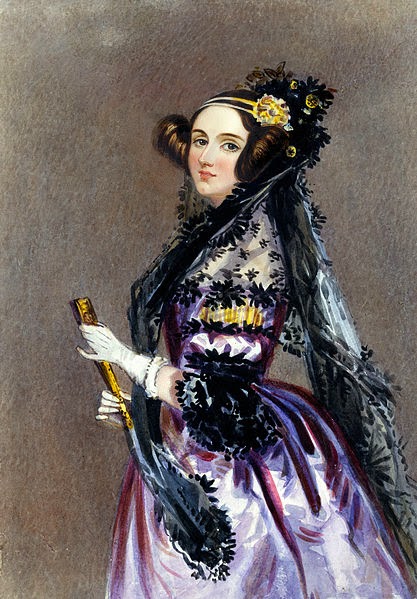
In honor of International Ada Lovelace Day, I am writing about the actress and inventor, Hedy Lamarr. I like this photo of Lamarr because I like to think she's reacting to the Internet idiots who post comments claiming women don't belong in technology. 

"Really," she would say, in her smoky, low voice. "You should have been there when I invented frequency-hopping, a technology still used today on wireless networks. I invented it to prevent Hitler from jamming the Allies' radio-controlled torpedoes. How about you, dude? What have you invented lately?" 

Lamarr was a Hollywood film star in the 1930s and 1940s. She was born Hedwig Eva Maria Kiesler in 1913 in Vienna, Austria. She married young and was unhappy in her marriage. She wrote in her autobiography that her husband, Fritz Mandl, a munitions manufacturer, was extremely controlling. 

In the 1930s, Lamarr accompanied her husband to dinners and meetings with arms developers and learned about control systems for aircraft. The marriage broke up in 1937, and Lamarr, an anti-Nazi of Jewish descent, escaped to Paris, then London, then Hollywood. She took her knowledge of control systems with her.  

Lamarr met her co-inventor, the avant-garde musician George Antheil, at a party in 1940. At the party, Lamarr proposed the idea of frequency-hopping as a method for radio remote control of torpedoes. Frequency-hopping could reduce the danger of detection or jamming of radio-controlled torpedoes. 

Although the idea of radio control for torpedoes was not new, the concept of frequency-hopping was. Broadcasting over a seemingly random series of radio frequencies, switching from frequency to frequency at split-second intervals, prevents radio signals from being jammed. The receiver can be synchronized to the transmitter to allow the two to jump frequencies together. If both the sender and receiver hop in sync, they understand the message, but anyone trying to eavesdrop hears random noise. 

Lamarr and Antheil obtained a patent for their "Secret Communication System" on August 11, 1942. The US Navy was unfortunately not interested in this early version of frequency-hopping. However, the idea was finally implemented in 1962, when it was used by US military ships during a blockade of Cuba, after the patent had expired. 

Subsequent patents in frequency-changing have referred to the Lamarr-Antheil patent as the basis of the field, and the concept lies behind anti-jamming devices used today. In modified form, frequency-hopping is used to send secure wireless transmissions in many modern communications systems.

The Electronic Frontier Foundation honored Lamarr with a belated award in 1997. Lamarr died in Casselberry, Florida on 19 January 2000. She was 85. 

Wednesday, October 8, 2014

Advertising Matters

Today at the Grace Hopper Celebration of Women in Computing, the CEO of GoDaddy, Blake Irving, is on a panel for male allies. This worries me.  

From 1984 to 2013, the number of women graduating with a degree in CS sank from 37% of the graduates to 14%. GoDaddy may be singlehandedly responsible for a large portion of that decline. 

For years GoDaddy advertised their domain name services with disgusting ads that showed nerdy IT guys and female sex objects. The message was clear: IT is for men. Displaying sexy body parts is for women. The 2013 GoDaddy Super Bowl commercial was the most tasteless ad ever made, not to mention one of the most sexist. 

I like to compare this to the ads that I grew up with. The print ads from IBM and other mainframe companies showed glamorous women, solving interesting problems using computers! I wanted to be that woman! Well, maybe not the woman in the following photo, because she's a blonde, but the ad is intriguing because it shows a woman working on an IBM System/360. 


Check out this brunette, in an ad for the Control Data CDC Cyber 70 Series mainframe. I could be her! I'm a brunette. She's not in the ad to sell to men. She's there to convince women to join the rank of programmers, especially if they use CDC computers. (We had an Amdahl mainframe at the University of Michigan where I went to grad school, but close enough!) 


Like Control Data and Amdahl, International Computers Limited (ICL) created machines to compete with IBM. As was typical for the times, ICL showed women working on their computers in their ads.


Check out this picture of a woman working at NSA on an IBM 360. I want to be her! :-) 


I got this photo from a 1970s timeline at NSA. I suspect the photo might be an ad, not because the woman in the picture couldn't do the work, but because the screen doesn't appear to be on? :-)

I also like this photo from NSA showing a Cray supercomputer. Note that the women are discreetly dressed, working on the computers, and not kissing the nerdy IT guy (as the GoDaddy 2013 Super Bowl ad showed.)

The GoDaddy 2013 Super Bowl ad was so disgusting that customers fled from the brand, both women and men. The company managed to insult both women and men. 


After the 2013 ad, I moved all my domain names but one from GoDaddy. Ironically, TheMakersOfThings.com is the one record I still have at GoDaddy but that was because I was planning to give up on the blog. Why write about women in tech if the industry is dominated by pigs like GoDaddy? Why encourage young women to go into a field where the women don't solve technical problems? They just show off their boobs. Why go into a field where your male coworkers will be pimply, out-of-shape geeks? 

Well, hopefully things will get better. Anita Borg Institute and the Grace Hopper conference will hopefully set GoDaddy on a track that supports the equitable treatment of women in tech. The male allies panel is actually a good idea, but the CEO of GoDaddy better start by deeply apologizing to women in tech.

In the meantime, I'm glad to see positive articles like this one from Glamour magazine about women in tech. Maybe soon we will start to see ads that show gorgeous women working on computers again. 


Tuesday, September 2, 2014

Allied Forces

Innovating Women


In September, 2014, a new book on women in STEM called Innovating Women shipped, after many months in development. I helped work on this book. The main authors are Vivek Wadhwa and Farai Chideya, an Indian-American man and an African-American woman. 

A few women have asked me why a man should write a book about women in technology. The last thing we need is yet another man telling us what we already know!


I don't think it matters that one of the authors is male, as long as he's not acting patriarchal. (I don't think it matters that the other author is not really in STEM either, since she's a great writer). Both of these authors are allies. 

What does it mean to be an ally? Many people have written about this, so Google it for better explanations than mine. But I think it means being a person with privilege who is operating in solidarity with someone who has been denied the privileges.  


It's a tricky business being an ally, though! I know I've made numerous mistakes as I've tried to ally with friends and relatives fighting for legal same-sex marriage and African Americans fighting for justice in Ferguson, Missouri, and throughout the United States. 

Sometimes allies act like they deserve a big reward for being an ally, or like they are the knight in shining armor coming to the rescue of the poor underprivileged people. That's not helpful. 


The easiest mistake to make when being an ally, however, is to turn the conversation to yourself. For example, those of us who work on the "women in tech" issue hear things like:

  • I've worked in tech for many years, but I've never seen any sexism. 
  • I hired a lot of women when I was a manager. 
  • I had a woman boss once and I didn't have a problem with it. 

We hear comments like this from both men and women. The speaker is turning the conversation to be about him or herself. These individual experiences, with a sample size of one, do not add anything to the conversation.


Now did our male author of Innovating Women try to turn the conversation to be about himself? Is he expecting some sort of huge accolade for helping the ladies? Maybe, a little bit? Is he an ally nonetheless? YES. Here's why I think he's an ally:

  • He spearheaded the Innovating Women project, then got out of the way.
  • With the help of female colleagues, he opened a forum for women to discuss the challenges that we face as women in tech. Hundreds of women joined the discussion. Our content became the book. 
  • He did not participate in the discussions. Only women told their stories. He just listened, which is an important skill for allies. 
  • The book development project was crowd-funded at Indiegogo, giving lots of people an opportunity to get involved. 
  • Vivek and colleagues recruited numerous female role models to tell their stories, including Google[X] VP Megan Smith (possible next White House CTO!), venture capitalist Heidi Roizen, and Anousheh Ansari, a serial entrepreneur and space explorer.
  • Vivek took on the old boys' club. When he first started writing about women in tech, men were extremely critical of him. Vivek didn't stand down. He argued with them. So, he's not just talking to women about what we need, as some of his female critics have assumed. He's talking to his own people too (men). That makes him a good ally.
  • Vivek will not directly benefit from the book. The profits will go to a fund at Singularity University to educate women about advancing technologies and to fund their startups. As far as Vivek "building his career, reputation, fame on women in tech issues," as a Twitterer said, that's bunk. He is already famous.  

The decision that someone is an ally resides with the person being allied, not the ally, according to Jamie Utt in this terrific article, "So You Call Yourself an Ally: 10 Things All 'Allies' Need to Know." 


So Vivek doesn't get to crown himself Mr. Big Super Ally, but I get to declare that I think he is an ally. Other women can make up their own minds, but I consider both Vivek Wadhwa and Farai Chideya allies of women in tech. 

By publishing a book that showcases the words and work of successful women in tech, the authors are helping women learn strategies to overcome artificial barriers. And by focusing on innovation, the book will help organizations learn how to benefit from the creativity and intelligence of all people, not just men.


Innovating Women: The Changing Face of Technology

Friday, May 30, 2014

Prince Charming Isn't Real Either


I like Arthur Chu's blog that discusses the dangers of nerdy guys believing the myth that as long as they work hard, they'll get the girl. (Your Princess Is in Another Castle: Misogyny, Entitlement, and Nerds) My only criticism is the ending. He says these men need to grow up. While that may be true, it's not enough. Perhaps Chu can write Part 2? In the meantime, I have a few comments on the topic... 

I love nerdy guys. My husband's perfect GPA from MIT was a big part of his sex appeal! :-) I hate to see nerds suffer. Chu's article made me sad for the nerdy guys. Who is giving them advice when their hearts get broken? Where can they go to cry? The men's rights organizations are too focused on rights, and no, men don't have a right to a girl. But they do have a right to pursue happiness. Perhaps they could learn from women? 

When women are heart-broken, we call our friends and talk for hours. We get pedicures and read Vogue. We get massages. We re-read every Bridget Jones book, and call our moms and our grandmas. We have access to about a million self-help books that teach us how to be self-sufficient, to rebound from a broken heart, to take care of ourselves. What do men have?

We women grew up thinking that Prince Charming would arrive. We've had to learn the hard way that he isn't coming, but at least we have support. We have girlfriends, guy friends, sisters, moms, aunts, grandmas, all willing to talk about our feelings and to help us return to thinking rationally about our love lives. And if that fails, there's always Ben and Jerry, and old Hugh Grant movies.   

In my case, Prince Charming didn't arrive, but love did, in the shape of a tall, gangly, brilliant software engineer. He wasn't Prince Charming, but he was somewhat charming, chivalrous, and romantic.

He was also persistent. He had to be persistent "to get the girl." But his persistence wasn't pressure to have sex (I had to get that going! :-). His persistence was taking me out on dates, bringing me fresh strawberries as a surprise one morning in February (we lived in California where strawberries ripen early), teaching me modular arithmetic, and going to movies together. 

We knew we were meant for each other when we both agreed that Star Trek III: The Search for Spock was way better than that silly Terms of Endearment! 

I think Back to the Future sealed the deal. We both loved that movie and still do. So we got married! Our plans for our 28th anniversary Sunday are dinner at a fancy restaurant, followed by watching Silicon Valley, followed by watching Cosmos, followed by... (censored). :-) 

Perhaps any nerdy guys who read this can learn from my hubby. Or maybe they could take my advice to watch Hugh Grant movies!?! OK, I admit, a lot of guys can't stand Hugh Grant... 

So, guys, start helping yourselves. You understand what will help better than we women do, whether it's support groups, blogging, movies, talking more to each other, etc. But be sure to talk to us women too. We're good with this touchy-feely stuff, and a lot of us would be glad to help. 

Wednesday, December 4, 2013

Thoughts on JFK Assassination


I wrote this piece on 11/22/13 and posted it on Facebook. I decided I really should post it here too, even though it's a bit tardy…

-----------------------------------------------------------------------

I had only recently realized that teachers had conversations that weren't about students. Back in October I had been surprised to hear them talking about the World Series and to hear them laughing at the Yankees for getting swept by the LA Dodgers. Now it was November and they were huddled in groups again, talking in their teacher voices. This time they weren't laughing though. In fact, some of them were crying. It was November 22nd, 1963. 

President Kennedy was cool. He was young and handsome with a gorgeous, fashionable wife. Because of him and his plan to send us to the moon, we got to study "new math" and learn about engineering and science. The Weekly Reader promised us that we could travel to space, and have flying cars, and never have to cook because we would have automatic meals prepared by a robotic chef. 

Suddenly the future looked less fun than we had imagined, though. Our teachers told us that Kennedy had been shot and we should go home early. 

Mothers would be home, of course, waiting to greet their kids in their pretty Donna Reed dresses, ready to comfort them with Campbell's soup, Jell-O, NestlĂ©'s Quik. They would then set them down on the Hoover-vacuumed carpet to watch TV until the Dads came home from work. 

We didn't have a TV. We didn't have carpeting, either, and my Mother wasn't too happy to see the five of us tromping in sooner than she expected. She was busy with a one-year old and a five-year old, and was probably hoping they would take a nap so she could have her ciggie and coffee in peace. We were quiet, though. We trooped into the living room, dropped our book bags, and picked up our books to read. It was as quiet as church in there. 

When my Dad got home, we turned on the radio and learned that Kennedy was dead. My Dad was a professor at Notre Dame. He said that people had spontaneously gone to the church on campus and prayed. 

I don't remember much else from that day. It seems like life returned to normal pretty quickly, and soon we were back to playing dolls, making up stories for the dolls to grow up and be famous politicians, or at least the tragic wives of politicians. At school we went back to learning Venn diagrams and multiplication tables. Music lessons continued. We moved to the right side of the tracks and bought some rugs. The Yankees lost the World Series again and didn't win again until 1977.

People talk about the loss of innocence that day, but I was too young to lose my innocence then. That came later when MLK and RFK were assassinated. Today, in 2013, I may no longer be the naive girl I once was, but I'm still inspired by space travel, flying cars, and robots. President Kennedy wasn't perfect but he inspired a generation of nerds and we still love him for that. 

Tuesday, October 15, 2013

A Passionate, Adventuresome Heroine

In honor of Ada Lovelace Day, I'm blogging about a woman in science, technology, engineering, and mathematics (STEM). I chose Megan Smith this year. Megan is a VP at Google[x], the branch of Google that is bringing us Google Glass and the driverless car!

Megan joined Google in 2003 and led the acquisition of some of Google's flagship technologies, including Google Earth, Google Maps, and Picasa. 

Before joining Google, Megan was CEO of PlanetOut. She also worked at General Magic and Apple Japan. As a student at MIT, she was part of a team that designed, built, and raced a solar car 2000 miles across the Australian outback. She earned a BS and MS in mechanical engineering from MIT, where she now serves on the board. She completed her MS thesis at the MIT Media Lab. 

I chose to write about Megan Smith, not just because she's awesome, but also because I love her post here, which is based on her keynote speech at this year's Grace Hopper Celebration of Women in Computing. The keynote was called "Passion, Adventure, and Heroic Engineering."

I love the fact that Megan applies passion to her work at Google and elsewhere. We should all be passionate about our work! And I love the fact that she sees STEM work as an adventure. 

Another thing I love about Megan's post is that it mentions the fact that we women were in computing, before so many women disappeared en masse in the 1990s and 2000s. I get irritated when people act like women in the computer field is a new thing. Most tekkies have heard of Ada Lovelace and Grace Hopper.


But there were also the code-breakers at Bletchley Park, and the women in the US who calculated ballistic trajectories during WWII, six of whom were recruited to become digital programmers for the ENIAC, and many, many more recent examples. 


(Why did women disappear? It's complicated, so I won't answer that question here. I cover it briefly in my talk here, though.)

To get back to Megan Smith, let's talk about Heroic Engineering. Wouldn't technology be a lot better if the developers of the technology all saw themselves as heroes? We aren't just making stuff work. We are solving global problems. Megan Smith knows this. She co-hosts Google's Solve for X, a forum to encourage and amplify technology-based "moonshot" thinking and collaboration.


By the way, I blogged about some of my other heroines for previous Ada Lovelace Day celebrations, including Melissa Hathaway and Radia Perlman. 


I also put together an entire page about heroines when I made a list of professors whom I would like to see teach a Udacity class. 

I look forward to reading many more stories about women heroines in STEM as people post them in honor of Ada Lovelace Day! 


Wednesday, May 15, 2013

Generational Differences

"Generations in a Family" photo by Alan Oppenheimer
Last week I attended a fantastic conference on "Generational Differences in the Workplace" organized by the Oregon Department of Human Services and others, and taught by Figure 8 Consulting. The workshop was educational but also surprisingly moving. We learned about unconscious biases, cultural agility, self-awareness, self-management, and the gifts that people of other ages offer us. We talked, we listened, we learned, and we opened our hearts to people not like us.

Per our instructors, this is the first time in a long time that there have been four distinct generations in the workplace:

Birth yearGeneration
1920-1945Traditionalists
1946-1964Baby Boomers
1965-1983Generation X
1984-2002Millennials (Generation Y)


Of course each individual is unique, and stereotyping should be avoided, but it is helpful to broadly categorize the characteristics and working styles of the different generations. That way we can work together better. Here's what I learned in the workshop about the different generations:

  • Traditionalists just want to work hard and get the job done. Their motto is "no whining!" They are digital immigrants (as opposed to natives) but able to work effectively with technology anyway. They don't like it when younger people just do the technical work rather than teaching them how to do it.
  • Baby Boomers are creative and like to be valued for their individuality. Nonetheless, they do like to work in teams and they value diversity. They like to work hard and to be in charge. They are comfortable with technology. In fact, they take credit for creating a lot of the technology we use today (although Generation X said that too). Some Baby Boomers feel over-worked and under-appreciated. Some of them said they feel like "the sandwich generation" because they are taking care of their elderly parents while also helping their kids and grandkids.
  • Generation X workers are fiercely independent. Many of them grew up as latchkey kids, so they know how to work alone. They are very efficient and want to be able to just go home if they finish their work early. They need to know why they are doing something, and don't like to be told "because that's how it's always been done." They like it if managers and clients can just tell them the expected end product and then get out of the way so they can get the job done! Many of them are raising small kids and appreciate flexible work hours. Of all the groups, they are statistically the least likely to be divorced. This is the group that taught us the importance of work/life balance.
  • Millennials are digital natives. They love technology and are good at using it and creating it. They like to multitask and to collaborate. They are efficient, resourceful, and able to use their social networks to find answers to problems. They can work anywhere and often work during their off hours. They like instant feedback and appreciate clarity. They want to be mentored but like it when older people "cut to the chase" and don't explain too much.
Near the end of the workshop, the proctors divided the class into generational cohorts. The task was to talk about what events defined us (whether it was Sputnik, the 1960s sex/drugs/rock-and-roll revolution, the Challenger space shuttle explosion, 9/11, etc.). We were asked to also discuss our key characteristics, how we like to work, and what we like and don't like about working with the other generations. We were told to find a spokesperson because after we met in our cohorts, we got back together and shared our thoughts with everyone else. It was fascinating to see how the cohorts worked.

  • The Traditionalists stayed in the room and didn't finish all the tasks because they reminisced about events for so long.
  • The Baby Boomers went outside into the sunshine and immediately formed a circle. Nobody told us to form a circle, but we just did it spontaneously. If we weren't so task-oriented, we probably would have started singing Kumbaya. :-) We complained about the Millennials, saying that they talk too loudly, are always on their phones, and often dress inappropriately. Our Baby Boomer spokesperson changed this to say "Whereas we appreciate the social graces of the Traditionalists, we think the Millennials are lacking in social graces." I loved that. We avoided insulting anyone.
  • The Generation X folks didn't form a single group. We had learned that they are very independent, so it was interesting to see that they worked in a few small groups instead of one big group.
  • The Millennials were fun to watch. They were very energetic. They were a very diverse group, with fewer white people than any of the other groups. Unlike the other three groups which took notes on paper, they took notes on an iPhone. That got a big laugh! There wasn't a dry eye in the house, though, when their spokesperson told us how much they appreciate the other generations.
The young man clasped his hands, and paused for a few seconds, and then told us earnestly, "You can trust us. We recognize that you fought for our civil rights and equal opportunity. We know the importance of what you achieved and we can carry the torch now."

I still get tears in my eyes just thinking about it. Maybe they don't dress appropriately sometimes, but who cares? What matters is that they can carry on. To quote Ted Kennedy, "...the work goes on, the cause endures, the hope still lives, and the dream shall never die."